
Manual order entry and digital order entry are two different ways of processing B2B sales orders. This article explains the key differences between both methods, how they impact efficiency and how ERP systems fit into each approach.
Order entry is a core part of every B2B sales process, yet it’s often one of the most manual and time-consuming steps.
Many businesses still rely on manual order entry methods such as Excel, paper forms, or email. Others have moved to digital order entry systems connected to their ERP.
Both approaches can work, but they lead to very different levels of efficiency, accuracy and scalability.
In this article, we’ll explain what manual and digital order entry mean, how they differ, and when each approach is typically used.
Manual order entry refers to handling sales orders without a connected digital system.
Instead, orders are typically handled through:
After the order is placed, it is usually entered into the company’s ERP system manually. As a result, the same order is often handled twice.
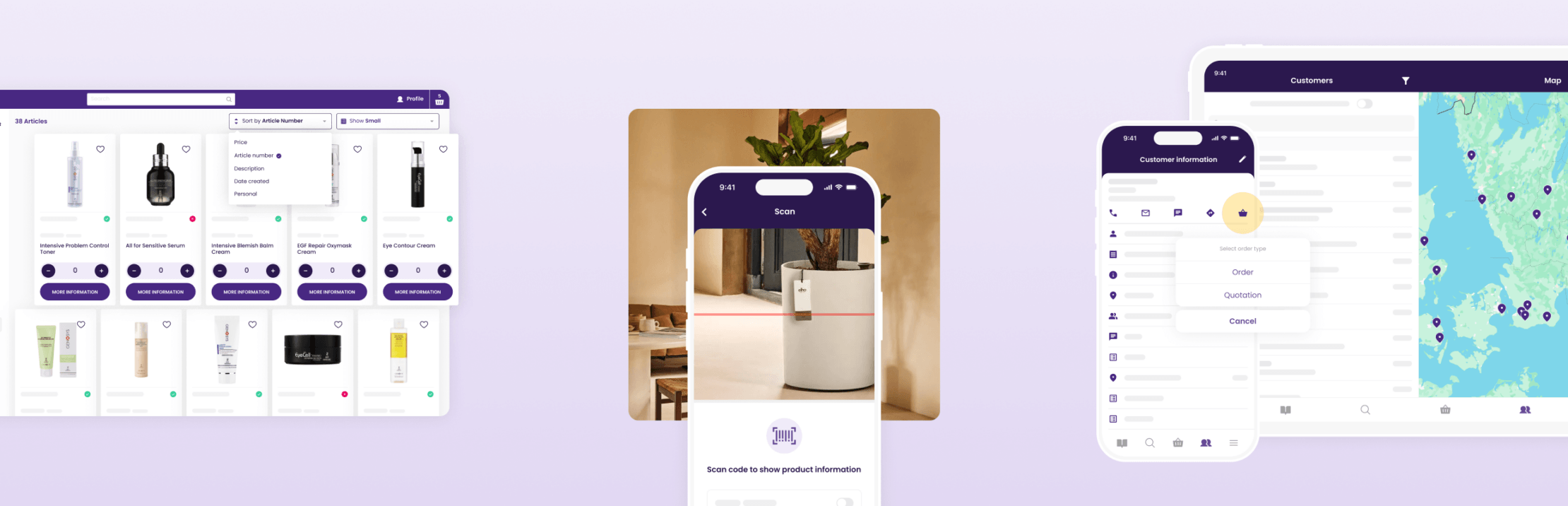
Digital order entry is a process where sales orders are created directly in a digital system, such as a sales app or B2B portal.
In this setup, orders are entered once and automatically synchronized with the company’s ERP system.
The differences between manual and digital order entry become clearer when comparing them side by side. See the table below on manual vs digital order entry:
Aspect
Manual Order Entry
Digital Order Entry
Order creation
Paper, Excel, email
Sales app, digital portal
ERP updates
Not up to date
Real-time
Error risk
Higher (manual re-entry)
Lower (automated sync)
Speed
Slower
Faster
Administration work
High
Low
Data accuracy
Depends on manual input
Consistent and structured
Scalability
Limited
High
Sales rep efficiency
Fragmented process
Integrated workflow
Offline capability
Often possible
Often supported in modern systems
As the comparison above shows, digital order entry offers several practical advantages for B2B sales teams. By reducing manual steps and connecting directly to your ERP system, it improves both efficiency and accuracy across the entire order process.
Because orders are entered directly into a digital system, there is no need for retyping or duplicate work. As a result, the risk of errors decreases significantly. In addition, built-in validations (such as pricing, customer data, and stock levels) help ensure that orders are correct from the start.
Digital order entry speeds up the entire process from order creation to ERP processing. Orders can be submitted instantly and processed without delays. This not only saves time internally but also allows customers to receive confirmations and deliveries faster.
With manual steps removed, administration teams spend less time entering and correcting orders. Instead, they can focus on more valuable tasks. At the same time, sales representatives can create orders independently without relying on back-office support.
One of the biggest advantages of digital order entry is the direct connection to your ERP system. Orders, customer data, and pricing are always up to date. This creates a single source of truth and improves visibility across the organization.
Digital tools, such as a sales app or b2b webshop like App4Sales, make it easier for sales teams to work efficiently, whether they are in the field, at trade fairs, or working remotely. They have access to up-to-date product information, customer data, and order history, all in one place. As a result, they can work faster and provide a better customer experience.
ERP systems remain the central system in both manual and digital order entry processes.
The difference lies in how data reaches the ERP:
It’s important to understand that digital order entry does not replace an ERP system. Instead, it works as a connected sales layer on top of your ERP, reducing manual work and improving data flow.
Manual order entry is still common in many organizations, especially when:
In many cases, companies continue using manual order entry simply because it has “always worked that way.”
As businesses grow, manual processes often start to slow things down. This is typically when companies begin looking for a more efficient approach.
Digital order entry becomes particularly valuable when companies experience:
In these situations, manual processes often become a bottleneck for growth and efficiency.
CCG Companies is one example of how moving from manual to digital order entry can improve both efficiency and sales performance.
Before implementing App4Sales, their team handled orders manually through Excel files, paper notes and internal handovers between sales and order management. Today, orders are entered directly during sales conversations and automatically transferred to their ERP system.
The result was not only less administration and faster order handling. Within one year, CCG Companies doubled their revenue.
5 tips to strengthen customer relationships & boost sales with digital tools. Learn how to personalize interactions & enhance loyalty in today’s market.
Both manual and digital order entry can support B2B sales, but they serve very different stages of business growth when comparing manual vs digital order entry.
For many companies, the shift from manual to digital order entry is not about replacing existing systems, but about improving how sales teams interact with them.
Digital order entry is not a replacement for ERP systems. It is a connected sales layer that helps sales teams work faster, reduce manual administration, and improve data accuracy across the entire order process.